By Ihechi Enyinnaya
Leaders of thought from the Ilaje communities of Ondo State and the Itsekiri communities of Delta State have rejected the proposed rerouting of the Lagos-Calabar Coastal Highway through hinterland communities, insisting that the project should retain its original coastal alignment.
The position was contained in a resolution reached at a joint meeting of representatives of the two ethnic nationalities held in Lagos on September 19, 2026.
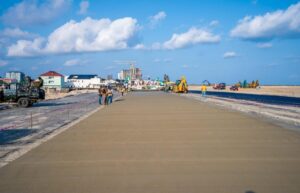
After what they described as exhaustive deliberations on the coastal highway project, the stakeholders called on the Itsekiri Nation to issue a statement publicly denouncing the rerouting of the road by the Minister of Works, Senator David Umahi.
They argued that the diversion was contrary to the vision of President Bola Tinubu for the Lagos-Calabar Coastal Highway and pledged to work jointly to ensure that the highway passes through the coastal communities of Ondo and Delta states.
According to the resolution, claims attributed to Umahi concerning the reasons for diverting the highway were “blatant falsehood,” with the stakeholders presenting cost and distance comparisons to support their position.
They claimed that construction along the coastal route, including the Ilaje and Itsekiri areas, would cost between ₦4 billion and ₦7.5 billion per kilometre, while the proposed hinterland route would cost between ₦7.5 billion and ₦12 billion per kilometre.
The stakeholders also disputed the distance advantage of the proposed alternative route.
They said the distance from Olosunmeta to the Itsekiri axis in Delta State was approximately 100 to 110 kilometres, while the proposed new route would stretch between 170 and 190 kilometres.
They argued that the longer route would consequently increase both the length and overall cost of the project.
The resolution further stated that the proposed alternative route passes through swampy terrain requiring numerous bridges and involves difficult geographical conditions.
By contrast, the stakeholders said, the original coastal alignment would provide a more direct corridor through communities including Olosunmeta, Araromi, Abe-Oroyo, Ogogoro, Ugbonla, Apata, Awoye, Ugbege, Oghoye, Orere, Agogboro and Ode-Ugborodo, extending through the coastline of Delta State.
To pursue their demands, the Ilaje and Itsekiri leaders agreed to establish a tactical committee comprising representatives of both ethnic nationalities.
The committee is expected to engage the Federal Government and appeal for the preservation of what they described as the original vision and alignment of the coastal highway.
It will also be responsible for sensitising and mobilising traditional institutions, youths, women, professionals and other stakeholders to support the campaign.
The resolution further authorised the exploration of legal action, where necessary, to ensure that “justice, equity and fairness” prevail in the handling of the project.
The leaders also agreed to prepare an inclusive memorandum involving traditional rulers, religious leaders, market women, opinion leaders and other stakeholders across the Ilaje and Itsekiri areas of the Niger Delta.
The memorandum, they said, would be forwarded to relevant government authorities and institutions to explain why the Lagos-Calabar Highway should remain on the coastal corridor through Ondo and Delta states.
An implementation committee is also expected to be constituted to coordinate and oversee the execution of the resolutions.
The document was signed on behalf of the Itsekiri ethnic nationality by Barrister Austin Nonen Oboroegbeyi and Comrade Amaechi Omagbitse, and on behalf of the Ilaje ethnic nationality by Dr Benson Enikuomehin, FCPA, and Dr Adeolu Austin Efotan.