By Daily Review Online
For more than 40 years, she stood by her husband, endured the pain of childlessness and helped build a family. But when her husband celebrated his traditional title, she found herself isolated and humiliated. Today, an extraordinary wave of public compassion has turned her into a mother figure to millions.
The story of Mrs Gertrude Anulika Ngwu, popularly known as Mama Ukehe, is one of heartbreak, family conflict, societal prejudice and an unexpected outpouring of love that has captured the attention of Nigerians at home and abroad.
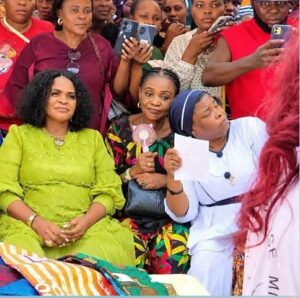
For a woman who reportedly spent more than four decades with her husband, supporting him through difficult times, the events surrounding his Ozo title-taking ceremony in Ukehe, Igbo-Etiti Local Government Area of Enugu State, became an experience she would probably never forget.
Mama Ukehe was the first wife of her husband. Although she had no biological children, accounts circulating about her life indicate that she stood by the man through challenging periods, working on the farm, trading in the market and contributing to the building of their family home.
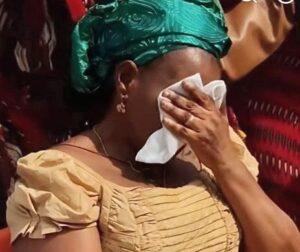
However, the arrival of a second wife, who reportedly has five children, appears to have introduced a different dimension to the family relationship.
The controversy came into public view during the husband’s Ozo title-taking ceremony, an important traditional occasion in Igbo society.
While the second wife reportedly enjoyed the attention and celebration of her children and other well-wishers, Mama Ukehe was seen sitting alone on a plastic chair, seemingly isolated from the festivities.
A video of the occasion subsequently surfaced on social media, triggering widespread outrage, sympathy and questions about the treatment of women who are unable to have biological children.
For many Nigerians, the image of an elderly woman sitting alone at an occasion that should have been a celebration for the entire family was deeply disturbing.
The incident quickly became more than a family disagreement. It opened a national conversation about marriage, childlessness, respect, family responsibility and the position of women in traditional African households.
**From rejection to overwhelming acceptance**
What initially appeared to be a painful episode in the life of one woman has turned into an extraordinary demonstration of public solidarity.
Following the circulation of the video, Nigerians from different backgrounds began identifying with Mama Ukehe, offering prayers, financial assistance, clothing, wrappers, household gifts and other forms of support.
Her story travelled beyond Ukehe, attracting attention from Nigerians in the diaspora and social media communities across the world.
She has since been affectionately embraced as a mother to millions, with many supporters describing her as Mama Uwa, or Mother of the World.
What is particularly remarkable is the reported scale of the generosity. People who have never met her are identifying with her as a mother, while contributions and promises of assistance continue to generate excitement.
There have also been reports of plans to build a house for her, while representatives of the Enugu State First Lady have reportedly visited her with gifts and expressions of support.
In a striking reversal of circumstances, a woman who appeared lonely and uncelebrated at her husband’s traditional ceremony has become the centre of a nationwide celebration.
The development has reinforced the popular belief that a person’s worth is not determined by the number of biological children they have.
**The burden of childlessness**
Beyond the emotional reactions, the Mama Ukehe experience raises important questions about the treatment of women who are unable to conceive.
In many African communities, motherhood is highly celebrated, while women without biological children sometimes face discrimination, ridicule and social exclusion.
Unfortunately, the inability to have children is often automatically blamed on women, even though infertility can involve either partner or both.
Medical science has long established that childlessness is not necessarily a woman’s fault. Yet, cultural expectations and traditional attitudes continue to place an unfair burden on women.
Mama Ukehe’s experience has therefore become a reminder that a woman’s dignity, contribution and humanity should never be measured by her reproductive capacity.
A woman who has spent decades supporting her husband, contributing to the family and sharing the burdens of marriage deserves respect, irrespective of whether she has biological children.
**Where was the husband?**
Perhaps one of the most important questions arising from the controversy concerns the responsibility of the husband.
In a polygamous household, the responsibility of maintaining peace, fairness and mutual respect cannot be placed entirely on the wives or children.
The husband has a significant role in ensuring that every member of the family understands their responsibilities and respects the position of others.
If reports of Mama Ukehe’s isolation and humiliation are accurate, questions must be asked about whether sufficient efforts were made by her husband to protect her dignity and maintain harmony within the household.
Could the situation have been different if the husband had consistently reminded his children from the second marriage that the first wife deserved their respect?
Could he have prevented the apparent division between the two sides of his family by creating an atmosphere of love and acceptance?
Reports circulating online also suggest that Mama Ukehe had been away from the matrimonial home for about two years before the ceremony, reportedly because the family situation had become unbearable.
If this account is accurate, it raises further questions about the extent of the marital difficulties and the efforts made to resolve them.
There is also the question of whether the second wife and her children understood the emotional significance of the first wife’s position in the family.
While the full circumstances surrounding the incident deserve to be heard from all parties, no family disagreement should become an excuse for publicly humiliating another person.
**An uncomfortable question about paternity**
Another question that has emerged in public discussions, although without any established evidence, concerns the biological paternity of the children of the second wife.
Some social media commentators have asked whether the children are necessarily the biological children of the husband.
However, this remains speculation and should not be presented as fact or used to cast aspersions on the children.
More importantly, the question highlights the dangers of measuring a woman’s worth against the number of children she has produced.
A person’s dignity should not depend on biological relationships, and children should never be dragged into disputes between adults.
**A lesson beyond Ukehe**
The Mama Ukehe story also challenges society to reconsider the way it treats women in marriages, particularly in households where there are multiple wives.
Marriage should be about companionship, sacrifice, mutual respect and shared responsibilities. The inability to have children should never erase the contributions a woman has made to her home over several decades.
Equally, traditional institutions and family ceremonies should provide opportunities for unity and celebration, not occasions for humiliation or the display of superiority.
The massive public response to Mama Ukehe demonstrates that Nigerians can unite around a common cause when they perceive injustice.
Yet, beyond the gifts, financial contributions and promises of a new home, the most important thing she deserves is lasting peace, security, dignity and the freedom to decide what is best for her future.
There is also a responsibility to ensure that the current wave of sympathy translates into sustainable support rather than a temporary social media sensation.
Her wishes, independence and personal decisions must remain central to whatever assistance is offered.
Ultimately, the story of Mama Ukehe is a powerful reminder that people should be valued for who they are and the sacrifices they make, not merely for what they can produce.
She may not have biological children of her own, but millions of Nigerians have now embraced her as a mother.
And perhaps the greatest lesson from her experience is this: **Never humiliate someone because of what they lack today. Tomorrow, the same society you expected to look away may rise to celebrate them.