By Our Reporter
The Independent Corrupt Practices and Other Related Offences Commission (ICPC) has received a formal petition calling for an investigation into allegations of corruption, procurement irregularities and abuse of office at Nigeria’s Presidential Amnesty Programme (PAP).
The petition, dated 15 September 2026 and addressed to the ICPC Chairman at the Commission’s headquarters in Abuja, was submitted by the Niger Delta Liberation Force (NDLF) and signed by the group’s Secretary, Comrade Akpos Owei-Keme.
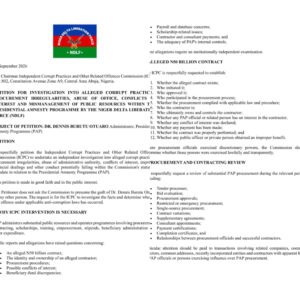
Titled “Petition for Investigation into Alleged Corrupt Practices, Procurement Irregularities, Abuse of Office, Conflicts of Interest and Mismanagement of Public Resources Within the Presidential Amnesty Programme by the Niger Delta Liberation Force (NDLF)”, it names Dr Dennis Burutu Otuaro, the PAP Administrator, as the subject of the complaint. However, the group stresses that it is not asking the Commission to presume guilt on his part or that of any other individual.
The document sets out a wide-ranging list of concerns the NDLF wants investigated. Chief among them is an alleged N50 billion contract whose existence, origin and beneficiaries the group says remain unclear.
The petitioners want the ICPC to establish “who initiated and approved the contract, who took part in the procurement process, who the contractor is, and who ultimately owns and controls that company.” They also want the Commission “to determine whether any PAP official or associate held an undisclosed interest in the contractor, whether a conflict of interest was ever declared, whether payments have already been made, and whether the work was properly carried out.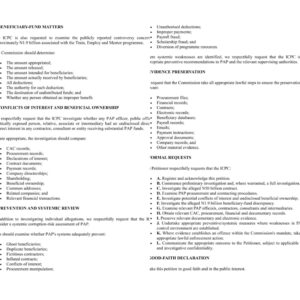
Beyond the single large contract, the petition calls for a broader review of PAP’s procurement and contracting practices over the relevant period, including tender processes, bid evaluation, single-source and emergency procurement, contract variations and consultant appointments.
The NDLF specifically urged scrutiny of dealings involving related companies, shared directors, common business addresses and recently incorporated firms with apparent links to PAP officials or persons with influence over procurement decisions.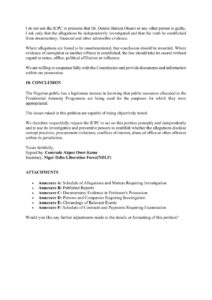
A part of the petition concerns an alleged shortfall of roughly N1.9 billion linked to the ‘Train, Employ and Mentor scheme,’ one of PAP’s empowerment initiatives.
The group is asking the ICPC to also “trace the money from appropriation through to disbursement, establishing how much was released, how much was intended for beneficiaries, how much they actually received, and the authority behind any deductions along the way.”
Not done, the group further flagged wider concerns about payroll and beneficiary databases, and about the scholarship component of the programme.
The petition asks investigators “to cross-reference Corporate Affairs Commission (CAC) records, procurement files, declarations of interest, payment records and shareholding information to determine whether any PAP officer, politically exposed person or associate had an undisclosed stake in companies receiving substantial PAP funds.”
It further called for “a systemic corruption-risk assessment of the programme to examine whether existing controls are sufficient to prevent ghost or duplicate beneficiaries, fictitious contractors, inflated contracts, payroll and scholarship fraud, and the diversion of programme resources more generally.” Where weaknesses are found, the NDLF wants the ICPC to issue preventive recommendations to PAP and its supervising authorities.
Among its formal requests, the NDLF has asked the ICPC to register and acknowledge the petition, open a preliminary and, where warranted, full investigation, and preserve relevant documentary and electronic evidence, including procurement files, financial records, contracts, emails and beneficiary databases. The group says it is willing to cooperate fully with the Commission and to make available any documents and information in its possession.
The petitioner said the petition was made in good faith and in the public interest, and not as an accusation of guilt against Dr Otuaro or anyone else. “Where allegations are found to be unsubstantiated, that conclusion should be recorded,” the document states, adding that “where evidence of corruption is established, the law should take its course without regard to status, office, political affiliation or influence.”
The petition is accompanied by six annexures said to contain a schedule of allegations, published reports, documentary evidence, a list of persons and companies said to require investigation, a chronology of events, and a schedule of contracts and payments for examination, though these supporting documents were not included in the material reviewed for this report.
As of the date of the petition, there has been no public response from the ICPC or from the Presidential Amnesty Programme regarding the allegations.