 By Eberechukwu Osuji
The political equation in Okigwe Zone is undergoing another major shake-up, after the African Democratic Congress (ADC) women’s structure decided to align with the Charles Onyirimba Senatorial Campaign, pledging to mobilise their formidable grassroots network for his election as senator for Imo North.
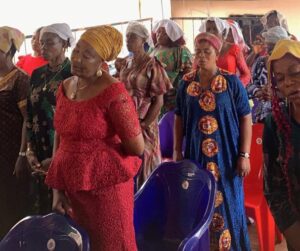
The ADC women who announced their decision in a well-attended meeting in Ehime Mbano on Friday said they arrived at their decision after weighing the various contenders and concluding that Onyirimba offers what they consider the strongest combination of competence, experience, exposure, character and capacity.
Meanwhile, Onyirimba supporters have greeted the development as a breakthrough in a campaign they describe as a political storm steadily sweeping through Okigwe Zone.
According to them, the latest alignment demonstrates that the movement is penetrating political structures previously considered difficult to dislodge, while attracting groups that are reassessing the qualities they want in the person who will represent the zone in the Senate.
The Director-General of the Charles Onyirimba Transformation Agenda Campaign Council, Mrs. Favour Nwelue, welcomed the women into the campaign, describing their decision as a significant indication of the growing reach of the Onyirimba movement.
According to her, the latest alignment demonstrates that the campaign is rapidly moving beyond an individual political aspiration to become a broad-based movement drawing support from different sections of Okigwe Zone.
Nwelue noted that women, youths, professionals, community organisations and political stakeholders were increasingly identifying with the campaign because of their conviction that the zone deserves a higher standard of representation.
She assured the people of Okigwe Zone that, if elected, Attorney Charles Onyirimba would provide the effective voice, purposeful representation and strong advocacy that the zone requires at the National Assembly.
The women argued that Okigwe’s next senator must be more than a political officeholder, adding that he must be someone capable of understanding the complexities of legislation, articulating the needs of the people, building productive relationships within government, attracting opportunities to the zone and using the Senate platform to pursue concrete development.
They therefore resolved to put their organisational strength behind the Onyirimba project and take the campaign to the grassroots across the six local government areas.
Their message was equally political and practical: voters should look beyond what happens during the campaign and consider what happens after the ballots have been counted.
They argued that political inducements may provide temporary relief, but the consequences of electing an incapable representative can last for years.
One of the women leaders captured their position bluntly: “We have looked at the contenders and we have made our choice. We believe Charles Onyirimba has what it takes to give Okigwe the representation it deserves.”
The declaration has added fresh momentum to a campaign that supporters say is already attracting a growing collection of political, professional, community and grassroots interests.
They describe the phenomenon as a hurricane gaining velocity.
It begins with one alignment, gathers another, crosses another political boundary and leaves behind a new political landscape.
The ADC women’s decision, therefore, is being portrayed as part of a much larger realignment rather than an isolated endorsement.
According to the Onyirimba camp, the campaign is increasingly becoming a meeting point for individuals and groups who believe that competence should take precedence over political familiarity and that the value of a senator should ultimately be measured by what he contributes to the people he represents.
That argument is becoming a central feature of the campaign’s political narrative.
Supporters maintain that the question before Okigwe voters is no longer simply which party or political structure should control the senatorial seat.
The more important question, they argue, is what the occupant of that seat can actually accomplish. Can the senator understand and influence legislation? Can he attract meaningful federal interventions? Can he articulate the concerns of constituents with clarity and authority? Can he build the relationships necessary to turn representation into development? And, ultimately, can he make the senatorial seat count?
These are the questions the Onyirimba campaign says voters should be asking.
The ADC women have pledged to make that argument at the grassroots, engaging women, families, communities and voters and building a sustained mobilisation network ahead of the election.
Their involvement is expected to add considerable grassroots energy to the campaign, particularly because women remain a critical force in voter mobilisation and community-level political engagement.
Addressing the women by telephone from the United States, Attorney Charles Onyirimba thanked them for their overwhelming show of confidence and pledged to justify the trust they had placed in him, assuring them that he would never let them down.
The Onyirimba camp says the development is one of several alignments taking shape around the candidacy, with other groups and interests reportedly moving closer to the campaign. If that momentum continues, the political landscape could become increasingly fluid as old alliances are tested and new coalitions emerge.
For Onyirimba supporters, the imagery is unmistakable. The political hurricane has entered Okigwe. It is gathering speed. It is crossing boundaries. It is pulling new alliances into its orbit.
And, they insist, it is steadily dismantling the political obstacles standing between the Onyirimba campaign and its ambition to produce the next senator for Okigwe Zone.
But beneath the dramatic language lies the central argument of the campaign: the 2027 election should be a contest of capacity, character, competence and vision.
The ADC women’s alignment, supporters believe, is another indication that this message is beginning to resonate beyond the traditional boundaries of the Onyirimba political base.
As more groups reassess their positions and new alliances emerge, the political weather over Okigwe Zone appears increasingly unsettled. The storm is moving. And according to the Onyirimba camp, it is gathering force with every new political alignment.